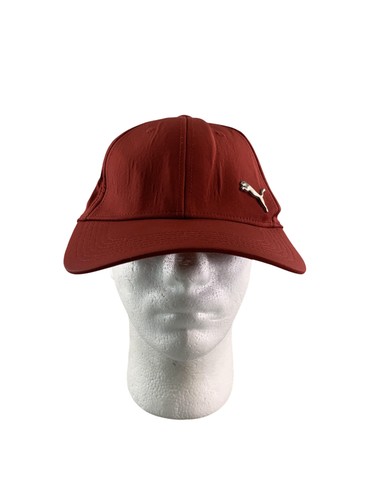
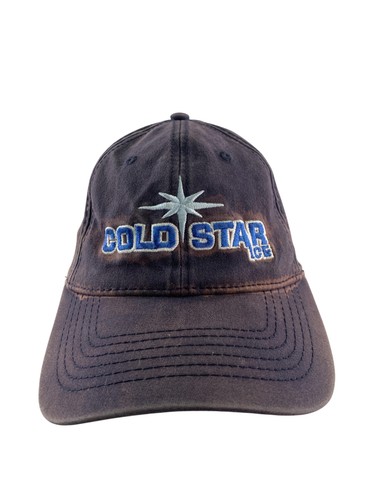
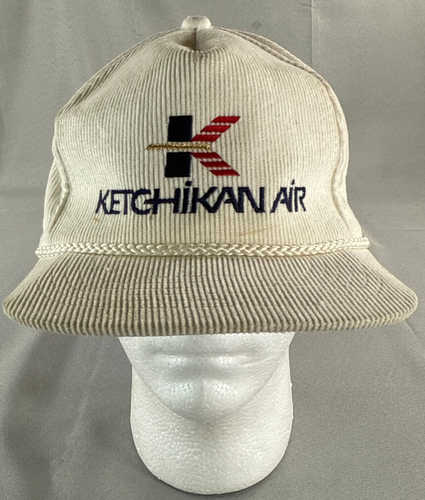
The short version
- Four different fastenings all get listed as “hat”, and only the fitted kind is actually sized to your head — work out which one you are looking at before you look at anything else.
- Measure your head once, divide the inches by pi, and you have a fitted size you can use for the rest of your life. It takes about thirty seconds and it never needs doing again.
- The condition faults that matter on a cap — sweatband salting, a warped brim, a collapsed crown — are the ones a straight-on product photograph is worst at showing.
A cap is the easiest thing in a wardrobe to buy badly online, and the reason is a vocabulary problem rather than a quality problem. Four completely different fastening systems get photographed from the same three-quarter angle and listed under the same three-letter word. One of them is cut to your head in eighths of an inch. One stretches. One adjusts in fixed steps. One adjusts continuously and will sit on almost anybody. Work out which one you are looking at and most of the risk in the transaction evaporates before you have even looked at the logo.
What follows is the order worth checking in, and it applies as much to a wool fitted cap as to a mesh trucker.
Four fastenings, and only one of them is sized
Turn the cap around and look at the back of the crown. Whatever is there tells you how the cap is sized, and sizing is the only part of this purchase you cannot fix later.

- Fitted. No gap, no strap, no adjuster — the crown is a closed circle. These are cut in eighths of an inch and the size is printed inside the sweatband. This is the only category where a number on the tag genuinely corresponds to a head.
- Stretch fit. Also a closed circle, but with an elastic band worked into the sweatband. Sized in ranges instead of numbers — S/M, L/XL — which is why you will see a cap listed as “fitted” with a letter size rather than a fraction. It is a different thing and it forgives about half a size in either direction.
- Snapback. An open back closed by a plastic tab with a row of pegs and a matching row of holes. It adjusts in fixed steps, so it does not fit continuously — you may find yourself between two settings.
- Strapback. An open back closed by a fabric or leather strap through a buckle, slider or clip. This adjusts smoothly rather than in steps and is the most forgiving of the four.
The abbreviations that show up in listings are worth translating too. OSFA and OSFM stand for one size fits all and one size fits most, and in practice they are a promise about the adjuster, not about your head. A cap described that way is nearly always a snapback or a strapback. It says nothing about crown depth, which decides whether a cap perches or sits properly.
Measure once and never guess again
If you only take one thing from this page, take this. Run a soft tape measure around your head, just above the ears and across the middle of the forehead, keeping it level all the way round. Snug, not tight. Write the number down in inches.

Now divide it by pi — 3.14 is close enough. The result is your fitted size, near enough to round to the nearest eighth. A head measuring about twenty-two and a half inches lands a shade over seven and an eighth. That is the whole calculation, and it is the same arithmetic the size charts are built from, which is why charts from different brands agree with each other to within about an eighth and no closer.
Two things worth knowing once you have your number. Wool and wool-blend crowns relax slightly with wear, so a fitted cap that is a fraction snug on day one will usually settle; one that is loose will never come back. And crown depth varies between makers even at an identical stated size, so if a cap sits higher on your head than you expected, the size was probably right and the crown was shallow.
Reading the construction from the photographs
Structured or unstructured
A structured crown has a stiffener behind the front panels, so it holds its shape standing on a table and gives embroidery a flat surface to sit on. An unstructured crown has none, collapses when you set it down, and moulds to the wearer instead. Neither is better; they are different garments. You can usually tell from a photograph because a structured cap photographs as a rigid arc across the front and an unstructured one photographs slumped.
Panel count
Six-panel is the default: two front panels with a seam running up the middle. Five-panel replaces those two with a single seamless front, which is why five-panel caps carry patches and prints more cleanly than embroidery. The seam is visible in almost any front-on photograph, so this is one of the few construction details you can confirm without asking a question.
Brim and mesh
Flat and pre-curved brims are a style choice, but the brim also carries a condition risk covered below. A trucker is a construction rather than a look: foam or fabric front panels with mesh behind, which is why it sits and breathes differently to a full-fabric cap.
What the inside of a cap says about its age
The interior is where a cap stops being anonymous. There are usually two labels in play: the maker of the blank cap, and whoever put the logo on it. On promotional and souvenir caps those are almost never the same company, which is why a cap can be embroidered for an airline or a hardware chain and still carry the name of a cap manufacturer inside.

Country of manufacture is the detail most often used to date a cap, and it is a genuine signal as long as it is treated as one input rather than a verdict. Manufacture moved around the world in waves, so a country stamped inside a cap narrows its likely era loosely and does not pin it. Corroborate it: the style of the maker's label, the material of the sweatband, whether the adjuster is a modern moulded plastic tab or an older metal buckle, and the graphic style of the embroidery itself. Two details that agree is evidence. One on its own is a guess with a tag on it.
One more fitted-cap detail: many are sold with a foil size sticker on the brim, and keeping it is purely a matter of taste. Its absence says nothing. Its presence on a cap otherwise showing years of wear is a small contradiction worth a second look.
The condition faults a photograph hides
Caps are worn against skin and hair, which makes their wear pattern unlike any other garment. These are the faults worth asking about, roughly in order of how often they are the thing that disappoints:
- Sweatband salting and staining. Perspiration leaves salts that stiffen and discolour the band, and the front interior of the crown just above it. It is the single most common problem on a worn cap and it never appears in a straight-on photograph of the front.
- Brim warp. A brim that has been through a wash or got soaked and dried unevenly will hold a twist. Look along the brim from the front rather than at it from above; a twist that is invisible face-on is obvious end-on.
- Crown collapse. A structured cap stored under weight for years takes a permanent dent. Sometimes it steams out and sometimes the stiffener has creased for good.
- Underbrim discolouration. The underside of the brim is usually the lightest fabric on the cap and picks up grey and yellow long before the crown looks tired.
- Embroidery pulls and mesh snags. A pulled thread in a logo is hard to correct and easy to miss at photo resolution. On mesh backs, look for a snag or a stretched hole where a hook or a hanger has caught.
- Cracked hardware. Plastic snap tabs go brittle with age and sun. A cracked peg row is a cheap cap and an expensive annoyance.
None of these are reasons not to buy a worn cap. They are reasons to know what you are buying, and every one of them is a fair question to ask a seller before you commit.
Where the caps actually sit on this site
Ours are split across two places, and it is worth knowing which is which because the site files by category rather than by shape. Everyday caps, streetwear fitteds, souvenir snapbacks and truckers sit in Accessories & Bags, alongside wallets, belts and bags. Anything tied to a team, a driver or a racing series — college caps, motorsport promo caps, stadium giveaways — is filed under the sports section, which despite its name holds far more team apparel and memorabilia than it does cards. If you are hunting a specific team's cap, that is the page to search rather than the accessories one.
Everything is pre-owned, including anything described as new with tags, and the photographs are of the actual cap rather than a better example of the same model. We describe what a cap looks like and what is wrong with it; we do not certify or authenticate anything, and the condition and authenticity policy sets out where that line sits. If a detail you need is not in the photographs — a sweatband, an interior label, the end-on view of a brim — asking for it is a normal thing to do.
If you are buying a bag or a wallet in the same order, the checks are completely different and worth reading separately in what to check on a used bag or wallet. And if the cap you are chasing is a team one, the jersey tiers guide covers how licensed sports apparel is labelled, which is the same labelling system that ends up inside team caps.