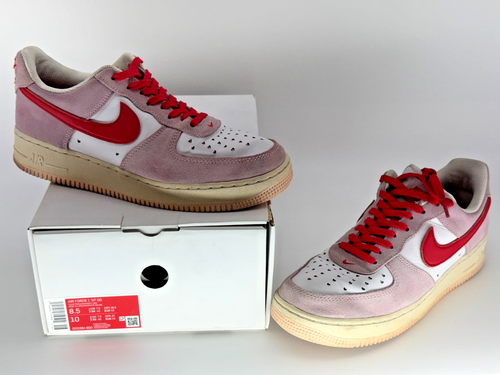
The short version
- Check the faults that cannot be repaired before you look at anything cosmetic: sole separation, a crumbling midsole, a collapsed heel counter and an outsole worn through.
- Yellowing on a clear outsole is oxidation inside the rubber, not dirt on top of it, so no amount of cleaning will shift it and a seller promising otherwise is guessing.
- The insole is the most honest part of the shoe — it records how far the previous owner walked in a way the tread pattern does not.
People inspect used shoes in the wrong order. They look at the upper first, because that is the part that photographs, and then at the tread, because it looks like the part that wears out. Neither is where a sneaker actually dies.
A pair can be scuffed, creased and grubby and still have years in it, because all of that is surface. A pair can look almost unworn and be finished, because the parts that fail are glue joints and foam, and both of them fail out of sight. Work down this list in order and you will spend your attention where it earns something.
First: the four faults that end a shoe
None of these have a reliable fix. If any of them is present, nothing else about the pair matters.
- Sole separation. The upper is glued to the midsole along a joint that flexes with every step. When that bond lets go it usually starts at the toe or along the inside edge of the forefoot, and it shows as a dark line or a shadow where the two parts have parted. It can be re-glued; it rarely stays re-glued, because you are asking an adhesive to hold a joint that bends thousands of times a day. Ask for a photo of the shoe bent at the toe, which opens any gap that exists.
- A crumbling midsole. Polyurethane midsoles break down chemically over time whether the shoe is worn or not, and being stored in a box does not help — in fact untouched pairs from the era when PU was common are the classic casualties, because nobody flexed them and nobody noticed. The signs are fine crazing across the foam, a chalky or powdery surface, and material that crumbles rather than dents under a thumbnail. The failure is sudden and total when it comes. Ethylene-vinyl acetate midsoles, which are what most modern sneakers use, behave differently: they compress and go flat rather than disintegrating, and a flattened midsole is a comfort problem, not a structural one.
- A collapsed heel counter. The stiffener inside the back of the shoe is what holds your heel in place. Press the back of the heel between finger and thumb: if it folds like fabric instead of resisting, the shoe has lost the thing that makes it a shoe. Common on pairs that were repeatedly stepped into without being unlaced.
- An outsole worn through to the midsole. Look at the outer edge of the heel and the ball of the foot. Once the rubber is gone and you can see foam through it, most sneakers are past economic repair — they are not built to be resoled the way a welted leather shoe is.
Yellowing is chemistry, not dirt
This one is worth understanding because it is the most frequently misdiagnosed thing in used footwear. Clear rubber outsoles and white midsole foam oxidise on exposure to air and light. The colour change happens inside the material. It is not a layer of grime sitting on the surface, and it does not come off, because there is nothing on the surface to come off.

You can tell the two apart in a photograph. Oxidation is even and amber, spread across the whole clear panel, and it is usually lighter in recesses and along protected edges where less air and light reached. Dirt and staining are patchy, greyer or browner, concentrated in the tread grooves and around the sidewall, and they follow the shape of whatever caused them.
There are chemical treatments sold for reversing yellowing. They exist, they sometimes work, the results are frequently uneven, and the effect is not always permanent. Our position is simpler: we photograph the soles as they are and describe the colour we see, and we would rather you knew a pair was ambered than be told a story about it.
The insole is the odometer
Tread wear tells you about surfaces. The insole tells you about the person. It is the most informative single component in a used sneaker and the one most often left out of listings.

- The impression. A footbed records the previous owner: a dished heel, dark toe imprints, the forefoot crushed flat under the ball. Deep, sharply defined impressions mean serious mileage regardless of what the outsole looks like.
- Is it the original. Most factory insoles are printed or branded, and on a good number of models the size and a style code are stamped on the underside. Lift it, or ask for a photo of it lifted.
- What a replacement implies. A fresh aftermarket insole in an otherwise well-worn shoe is not sinister, but it usually means the original was worn out, smelled, or both. It also removes a data point you would otherwise have had.
- Odour lives here. If a pair smells, the insole is almost always the source, and it is the cheapest part of the shoe to replace.
None of this is authentication. We describe and photograph what is in the box; we do not authenticate or grade footwear, and we do not describe anything as deadstock. Everything on our shoe shelves is pre-owned.
Creasing, uppers and the toe box
Creasing is where most buyers over-react. A crease is a fold in the material at the flex point and by itself it is cosmetic. What matters is whether the crease has broken through.

On smooth leather and on painted or coated leather, look into the deepest crease for a crack in the finish, and for the pinhole that often opens at the very deepest point of the fold. A cracked finish will not close up and will keep opening. On mesh, check the same flex line plus the eyestay — the panel the lace holes sit in — for blown threads. On suede and nubuck, a shiny patch means the nap has been crushed flat; brushing lifts a little of it and no more, so treat shine as permanent when you are deciding what a pair is worth to you.
Then the small hardware. Eyelets pulling out of the panel, a torn eyestay, split heel tabs and missing aglets are all visible in photos if you look for them, and all of them are more annoying than a scuff.
Sizing a shoe that has already taken somebody else's shape
The number on the tongue label describes the last the shoe was built on, and lasts differ between brands and between models within a brand. Two pairs marked the same can fit a full size apart in practice, which is why length on the tag is a poor way to buy footwear you cannot try on.
The more useful figure is the insole length, measured heel to toe with the insole out of the shoe. Compare it against a pair you own and get on with. There is one wrinkle specific to used footwear: a shoe that has been worn has moulded to another foot, so a technically correct size can still feel odd for the first few wears, and a shoe worn by somebody with a very different foot shape may never feel entirely yours. Low, canvas and unstructured styles adapt again quickly. Rigid leather and structured runners are less forgiving.
The same principle — measure the object, do not trust the label — is the whole of reading flat-lay measurements on clothing, and it applies here for the same reason.
A running order you can do in two minutes
Given a set of photographs, this is the sequence:
- Sole edge, all the way round, both shoes, for separation.
- Midsole surface for crazing, chalkiness or crumbling.
- Heel from behind, for a counter that has folded.
- Outsole for wear through to foam, and note whether the wear is even.
- Clear panels for even amber versus patchy staining.
- Insole, lifted if possible.
- Toe crease for cracks and pinholes.
- Eyelets, eyestay and heel tab.
If a listing does not show one of those, ask. The pair is a physical object sitting on a shelf here, so pointing a camera at the part you want to see costs us nothing and saves both of us a return.
Footwear is a thin part of our stock compared with clothing, so if the shelves do not have your size today it is worth looking again rather than settling. If what you are really after is the outfit around the shoes, menswear and womenswear run far deeper, and the fabric faults to check there are covered in judging clothing condition from photos.