The short version
- Pick a lane narrow enough that you could actually finish it. A collection with a definable edge stays fun and stays affordable; an open-ended one just becomes a pile.
- Buy the common pieces first and deliberately. They are cheap, they teach you the line, and they make the rare piece obvious when it finally turns up in front of you.
Almost nobody wrecks a collecting budget on one bad purchase. It goes in small increments, early, through a series of decisions that each felt reasonable at the time: buying broadly before knowing anything, paying a premium for condition that does not matter to you, and acquiring pieces because they were available rather than because they were wanted.
What follows is an order of operations. It is not about spending less on each item. It is about spending on the right items in the right sequence, which is a different and much more effective thing.
Pick a lane narrow enough to finish
The most valuable decision you make costs nothing: deciding what your collection is not.

An open brief such as I collect action figures has no edge, so no purchase can ever be wrong and none can ever be a milestone. A closed brief has both. Compare these:
- One line, one scale, one era. Every figure from a single toy line, in the size it was originally sold in.
- One character across everything. Every version of a single character, in whatever form, at whatever scale.
- One manufacturer, one year. A snapshot of what a company made in a single production run.
- One visual idea. Cars in one livery, figures in one colourway, anything unified by how it looks on a shelf.
Any of those can be described in a sentence, and each has a natural finish line. That matters for three reasons. It makes the collection legible to other people, which is most of the pleasure of having one. It gives you a reason to decline things, which is most of the budget. And it turns you into a specialist quickly, which is where the real advantage lives, because depth in one lane beats shallow knowledge in ten every single time you are looking at a listing.
Narrow does not mean small. A single popular line can run to hundreds of variants. Narrow means defined.
Buy the common pieces first, on purpose
The instinct is to save for the centrepiece. Resist it for a while, and buy the ordinary pieces first, deliberately, while they are cheap.

Common pieces are how you learn the line. Holding a dozen of them teaches you what the plastic feels like, how the paint was applied, what the copyright stamp looks like, how the card was printed, which joints were always loose from the factory and which have been abused. None of that transfers from reading. Once you have that calibration, the odd piece announces itself, and the value of that skill is enormous relative to what the pieces cost.
They also make the expensive purchase safer. Buying the rare item first means the most costly decision you will make is the one you are least equipped to make. Reverse it: spend a modest amount building the eye, then spend the real money once you have it.
And a shelf of common pieces looks like a collection. A single expensive item on an empty shelf looks like a single expensive item.
Where a modest budget goes furthest
Some categories are structurally friendlier to a small budget, because they were mass produced, because loose examples are plentiful, or because the entry price was low to begin with.

Trading cards
The best training category there is. Cards are cheap in quantity, the condition language is the most developed in the hobby, and the difference between a sharp corner and a soft one is something you can only learn with a stack in your hands. Sorting and grading your own cards by eye, then checking yourself against how they were described, builds an eye that transfers to everything else. Start with trading cards.
Die-cast and Hot Wheels
Made in enormous numbers over decades, which keeps loose examples inexpensive while the variations stay genuinely interesting: wheel types, base castings, colour runs and market-specific issues. A lane like one casting in every colour it was released in is affordable and has a real finish line. Browse Hot Wheels or the wider die-cast and vehicles shelf, and if racing is your subject, racing and NASCAR is one of the deeper corners we carry.
Funko Pop
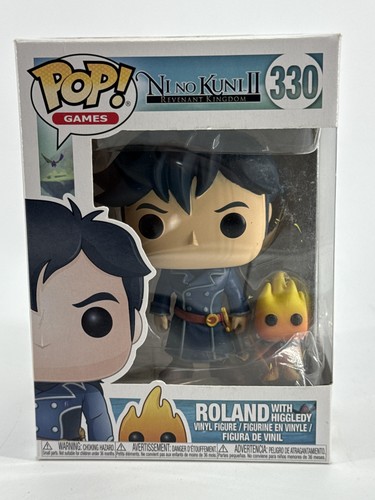
A modern line with a clear structure: numbered figures, identifiable exclusives, and condition that is almost entirely a question of the box. That makes it unusually easy to learn, and unusually easy to define a lane inside. It is also a category where box condition drives the difference between an ordinary piece and a good one, so it teaches packaging discipline fast. See Funko Pop.
Loose action figures
Carded figures carry a premium for the card. If the card is not what you are collecting, buying loose gets you the same sculpt for meaningfully less, and lets you handle and display it. Whole serious collections are built entirely loose, by choice. See action figures.
The three ways beginners overpay
Paying for condition you do not need. Condition premiums are steepest at the top of the scale, and the last increment often costs more than all the ones below it. If the piece is going on an open shelf under a lamp to be looked at, a lightly worn example may serve you identically for a fraction of the money. Decide honestly whether you are collecting to display or to preserve, because they are different hobbies with different budgets.
Paying for a story. Rarity claims, background narratives and adjectives like grail attach to the listing, not to the object. The object is what it is. Price what you can see, and let the story be free.
Buying availability instead of want. The most common budget leak is a series of small purchases of things that were merely in front of you. A defined lane fixes this almost by itself, because most things are simply out of scope and the decision is already made.
Condition is a budget decision, not a virtue
There is a quiet assumption in collecting that better condition is always the more serious choice. It is not. It is a trade, and which side of it you want depends on what you are doing.
If you want to handle, pose and display, buy honest used examples and buy more of them. If you want to preserve, buy the best condition you can afford and buy fewer. Trouble starts when someone pays preservation prices for pieces that will live on an open shelf in the sun, which is paying twice for something they then actively undo.
Whichever way you go, condition words need reading carefully, and they mean different things in different corners of the hobby. What condition words actually mean unpicks that vocabulary, and what a good listing shows you covers judging condition from photographs before you commit.
One thing to know going in: everything we sell is pre-owned, including items in sealed or new-with-tags condition, and the photographs are of the actual piece rather than a catalogue image. That is exactly what you want when you are learning, because you are looking at evidence instead of marketing while your eye is still forming.