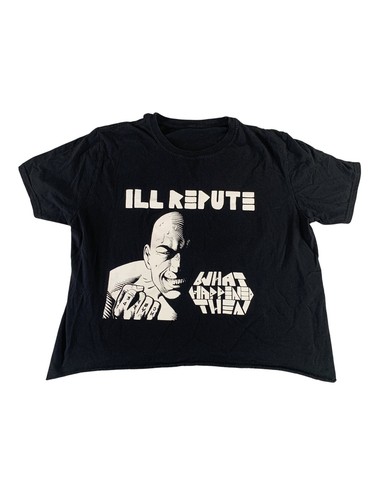
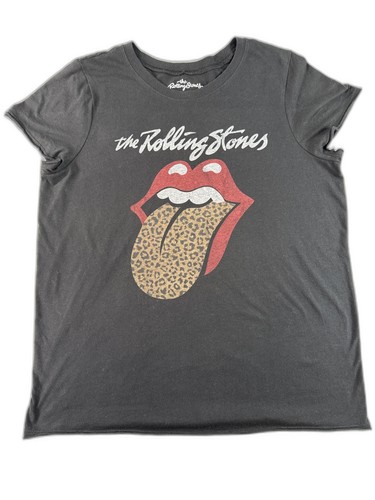
The short version
- Ask about the print before you ask about the band: a back print listing tour dates and venues is the strongest single sign a shirt was sold at shows rather than in a shop.
- The copyright year on the artwork is not the year the shirt was printed. Reprints carry the original date and always have, which is why the date on the front settles nothing.
- The blank the graphic is printed on dates the garment more reliably than anything printed on the front of it.
There are a very large number of band shirts in the world and most of them are worth what a nice shirt is worth. That is not a criticism of them. It is the reason the small proportion that are genuinely collectible are worth identifying, and the reason so many listings describe an ordinary shirt in the language of a rare one.
What follows is a triage rather than a checklist. Five questions, asked in this order, because each one narrows the field enough to make the next one quicker. You can run the whole sequence in about a minute once you have done it a few times.
Question one: is there a back print, and does it list dates?
Turn the shirt over first. This is the single most efficient question you can ask, because it separates two fundamentally different objects that look alike from the front.

A back print listing dates and cities means the shirt was made for a specific run of shows and, in the ordinary case, sold at those shows. It is tied to an event. It has a natural production limit, since only so many were printed and only the people who were there could buy one. That is the shape of a collectible.
A shirt with a front graphic and a blank back is a different product. It might be excellent and it might be old, but it was made to be sold continuously through shops and catalogues rather than at a venue, which means the quantity was set by demand rather than by an event. Both kinds exist in every era. Only one of them has scarcity built into it.
Two intermediate cases are worth recognising. Crew and local-crew shirts, made for people working the tour rather than for sale, are typically scarcer than the shirts sold to the audience. And promotional shirts made for record shops and radio were never sold at all, which is a different kind of scarce again.
Question two: what blank is it printed on?
Now look at the neck tag, which is where the shirt stops being about music and starts being about manufacturing. A band shirt is a blank T-shirt somebody printed on, and the blank is dated far more reliably than the graphic.

Some names on a neck tag are period markers in their own right. Screen Stars, and the heavier Screen Stars Best, appear on an enormous amount of older printed merchandise. Signal, Spring Ford, Tultex, Anvil and the older Hanes and Fruit of the Loom labels all sit in that world. Distinct from these are the concert merchandise companies — Brockum, Winterland and Giant among them — whose names appear because they produced and sold the tour merchandise itself, so their tags carry more specific information than a plain blank does.
At the other end, some blanks point firmly modern. Gildan in particular became ubiquitous well after the era most people mean by vintage, so a Gildan neck tag on a shirt being sold as a period piece is a question that needs answering. This is a strong rule of thumb rather than a law, and it is worth holding it that way.
The tag is not the only construction evidence, and it is the evidence most easily removed — plenty of genuine old shirts have had the tag cut out because it itched. When there is no tag, the hem does the work instead, and the stitching at the sleeve and bottom hem becomes the primary structural test.
Question three: what does the copyright line actually say?
Almost every licensed band shirt carries a small copyright line, usually at the bottom edge of the front print or under the back print. People read the year on it and stop, which is the most common single error in this whole category.
That year is the copyright date of the artwork. It is not the date the shirt was printed, and a reprint made decades later carries the original year quite legitimately, because the artwork is still the same artwork. A 1991 date on a print tells you the design is from 1991. It tells you nothing about the cotton it is sitting on.
The useful part of that line is not the year but the name next to it. The licensing entity changes over time, and a modern licensor's name beside an old artwork date is the clearest possible statement that you are holding a later production of an older design. Read the whole line, then compare the name against the blank you identified in question two. When those two disagree, believe the blank.
Question four: does the wear tell the same story as the shirt?
A garment that has been worn for thirty years accumulates a consistent pattern of damage, and consistency is the thing to look for rather than damage itself.
A screen print ages by cracking, and genuine cracking follows the places the fabric has actually been stressed — across the chest where it folded, at the shoulders, wherever it creased in a drawer. It is uneven, because wear is uneven. Artificial distressing tends to be applied evenly across the whole graphic, which looks like wear at a glance and looks wrong once you have seen the real thing beside it.
Then check whether the rest of the garment agrees. Sun fade should be heavier on the shoulders. The collar should have lost some of its recovery and should sit slightly wavy. There may be pinholes near the hem. A shirt with a heavily distressed print and a collar that still snaps back tight is telling you two different stories about the same thirty years, and one of them is not true.
None of this is proof, and honest exceptions exist in quantity — shirts bought and never worn, shirts worn twice, shirts stored well. It is a reason to ask another question, not a verdict.
Question five: who actually wants this band?
This is the question that decides the answer, and it is the one collectors skip because it feels less interesting than the archaeology.
Scarcity by itself is not value. A genuinely rare shirt for an act with no collector base is a rare shirt that few people are looking for. Conversely, a widely produced shirt for an act with a large and active following can be sought after despite having been printed in quantity. Demand does most of the work, and demand is about the music rather than the garment.
Which is why the sensible order is the one used here. The first four questions establish what the object is. This one establishes whether anyone is looking for it. You need both, and no amount of correct answers to the first four compensates for a no to the fifth.
What matters less than the internet suggests
A few things get weighted heavily in listings and lightly by people who actually buy.
- The word vintage. It has no agreed definition in clothing and is applied to anything from genuinely old to a graphic printed last year in a retro style.
- Softness. Old cotton is soft, but so is any cotton that has been washed enough. It is a pleasant quality, not evidence.
- A fifty-fifty poly-cotton blend. Extremely common in the era people are usually chasing, and also extremely common now. It supports a date, it does not make one.
- Overall condition. Counterintuitively this matters less here than in most collecting. Honest wear is expected and often wanted. What is penalised is damage that interrupts the graphic.
Bootlegs are not automatically worthless
Unofficial shirts sold outside venues have their own following, and some are collected specifically because they are unlicensed — the artwork is often stranger and more interesting than anything the label approved, and far fewer were made.
That is a different thing from a shirt manufactured recently to look old and sold as though it were. The distinction is not licensed against unlicensed; it is whether the object is what it is being described as. A period bootleg honestly described is a legitimate collectible. A modern reproduction described as a period piece is a misrepresentation regardless of who printed it.
What is actually on our racks
Being straight about this: most band shirts in circulation are modern official merchandise and retail reissues, and that is true of most of what comes through here too. It is what people buy at shows now and what they eventually pass on. Genuine period tour shirts are uncommon in the wild, and a resale showroom that claimed a deep vault of them would be describing a different business.
So we list what we have and let you sort it. Everything is pre-owned, including anything still carrying its original tags. We photograph the actual shirt, front and back, take measurements flat because tagged sizes have drifted over the decades, and describe cracking and fading rather than shooting around it. We do not authenticate, grade or attribute — the five questions above are yours to run, and the listing photographs are meant to give you enough to run them.
Shirts sit in men's clothing and women's clothing, with the older pieces in vintage. If you are working through a collection of your own rather than buying, we also buy and take consignment.