The short version
- Nike codes run six characters, a hyphen, then three digits. The first block is the product and the last three are the colourway.
- adidas uses a six-character article number with no hyphen, printed on the same kind of wash tag and doing the same job.
- The code is the check. If the number on the garment does not return that garment, you are looking at a swapped tag, a copy, or a listing written from a guess.
Sportswear is the easiest category of clothing to identify precisely and the one people most often guess at. Both Nike and adidas print a product code on the wash tag of nearly everything they make, and that code resolves to one specific garment in one specific colourway. It is a database key sitting inside the side seam, and most buyers never use it.
This guide is about using it: where to find the code, what each brand's format looks like, what to do with it once you have it, and the situations where the method stops working.
Why the code beats the logo
Logos are the worst identifying feature on athletic clothing. They are the part a counterfeiter puts the effort into, they change over time in ways that are easy to imitate, and licensed products carry them legitimately while being made by somebody else entirely.
The code has none of those problems. It is printed somewhere nobody looks, in a format that has to be internally consistent to be useful to the company, and it either resolves to the garment in front of you or it does not. That yes-or-no quality is what makes it worth more than any amount of squinting at a swoosh.
Finding it: the wash tag, not the neck label
Look inside the garment at the lower side seam, usually on the wearer's left. There is normally a stack of small tags there carrying the fibre content, the care symbols, the country of manufacture, the sizing in several markets, and the product code.

The neck label — the branded one you can see when the garment is on a hanger — rarely carries it. On a lot of modern sportswear the neck label is not a label at all but a heat-transferred print, which is worth knowing because those wear away with washing and their absence does not mean a tag was removed.
If the side-seam tags have been cut out, which is common on garments somebody actually wore, you have lost the code and you fall back to everything else in this guide.
Nike: six characters, a hyphen, three digits

A Nike style code is a block of six characters, then a hyphen, then three digits. The first block identifies the product. The final three identify the colourway, which is why the same design in two colours has two codes that differ only after the hyphen.
The first block comes in two shapes and both are current. It can be six digits, and it can be two letters followed by four digits. Our own stock shows both at once: there is a Dri-FIT tee tagged AA2809-677 and a running shoe tagged 881805-001. Neither format is older or more legitimate than the other, and a listing that treats one as suspicious is wrong.
One trap worth naming, because our racks contain a perfect example of it. Nike uses RN inside some model names as an abbreviation for Run — the shoe above is a Flex Experience RN. That has nothing to do with the RN number discussed further down, which is a completely separate regulatory identifier. Two different things, same two letters.
adidas: six characters, no hyphen
adidas calls its equivalent the article number, and on current production it is six characters with no hyphen — typically two letters followed by four digits. In our stock that pattern turns up on everything from Originals trainers to women's tees, printed on the care label and usually repeated on the box or hangtag wherever those have survived.

Because there is no hyphen, the colourway is not split out visually the way Nike splits it. The whole article number identifies the product and the colour together, so two colours of the same garment get two unrelated-looking codes rather than a shared prefix. That is the single most important practical difference between the two systems, and it changes how you search.
Older adidas production used other formats, including longer numeric strings, and the conventions have changed more than once. If a code you are holding does not match the modern shape, that is not evidence of anything wrong — it is a reason to search the string rather than to try to parse it.
What to do with the code
- Photograph the tag before anything else, in daylight, close enough to read. Codes fade, and a legible photograph outlives the tag.
- Search the code as a plain string. You want the model name, the season, and the colourway name.
- Compare what comes back against what is in front of you. Same colour placement? Same collar? Same fabric described?
- If the code returns nothing at all, note that and weigh it. It is weak evidence on its own, since search coverage of old products is patchy, but combined with anything else it starts to matter.
- If the code returns a clearly different garment, stop. That is the strongest single signal you will get.
The logo tells you the line, not the year
Once the code has done its work, the logo becomes useful for a narrower question: which range the garment belongs to.
With adidas the split is clear. The trefoil marks the Originals line, the heritage and lifestyle range. The three-bar mark generally called the Badge of Sport marks performance product — there is a Badge of Sport graphic tee in our stock alongside an Originals shoe, and the two marks are telling you about two different parts of the business rather than two different decades.
Nike is looser. The wordmark set above the swoosh gave way over time to the swoosh used alone, and collectors use tag styles as era shorthand. The honest position is that these date ranges are argued about, they vary by product category and by market, and I am not going to print a confident year for a change I cannot source. Use the tag style to tell you roughly where you are, and let the code carry the actual identification.
Fabric technology names — Dri-FIT, Climalite, AEROREADY and their relatives — work the same way. They narrow an era loosely because trademarks get introduced and retired, and they are far too fuzzy to date a garment on their own.
The RN number, and the public database nobody uses
Somewhere on the tag stack of a garment sold in the United States you will usually find a registered identification number, printed as RN followed by digits. It identifies the business responsible for the garment, and the Federal Trade Commission maintains a public register you can search.
This is genuinely useful and almost entirely ignored by buyers. If an RN resolves to a company that has nothing to do with the brand on the front, that is worth understanding — although note that the honest explanation is frequently licensing rather than fraud. A great deal of team sportswear is exactly this: brand-marked, league-licensed, and manufactured under an arrangement that puts a different entity on the compliance tag.
Deliberately, no specific RN appears in this guide. Numbers get transcribed wrongly and repeated forever, and the register is a search away.
Where this method fails
- Cut tags. No code, no lookup. Very common on garments that were worn rather than stored.
- Team and player issue. Items made for a team rather than for retail may never have had a retail code at all.
- Promotional and sample pieces. These carry markings that do not resolve publicly, which is expected rather than suspicious.
- Worn-off heat transfers. Tagless neck printing disappears with washing, so a blank neck is not a red flag by itself.
- Good copies. A counterfeit can print a real code lifted from a real garment. This is why the check is whether the code returns this garment, not whether the code exists.
That last point is the one worth internalising. A code that resolves correctly and matches the item is strong evidence. A code that merely exists is almost none.
Everything else you can check without the code
Stitching density and consistency, particularly where a hem turns a corner. Whether the fibre content on the tag matches how the fabric actually behaves in your hand. Whether printed graphics are cracked in a way consistent with the garment's other wear. Whether sizing markings across different regional systems agree with each other. Whether embroidery has clean, dense backing rather than loose floats on the reverse.
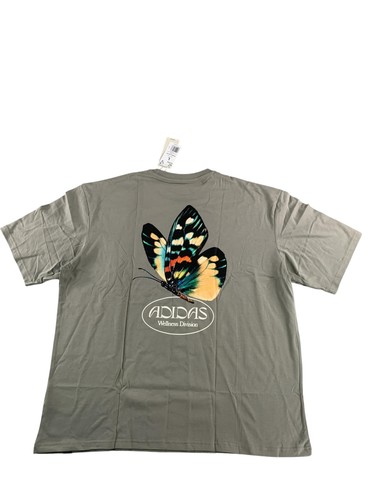
For plain shirts there is a further structural test that is harder to fake than any tag, because it lives in the construction rather than the labelling — the hem itself. And where a shirt carries a graphic rather than a logo, the print and the blank it sits on are a separate line of evidence again.
How this shows up in our listings
Where a garment still carries a legible code, we put it in the listing, which is why some of our titles read like part numbers. That is deliberate: it lets you check us rather than take our word, and it lets you find the exact thing you already own in a different size.
Everything is pre-owned, including pieces that still have their retail tags attached — that is a statement about condition, not about origin. We describe what we can see and measure, and we do not authenticate or grade. Sportswear is spread across men's, women's and kids and baby, with footwear in shoes.